FRAMEMOG M ← BACK TO CALCULATE
FRAME IMPROVEMENT GUIDE

FRAME RECOMMENDATIONS

Choose the part of your frame you want to understand or improve. Each guide explains what is primarily determined by genetics, what may still change during normal development, and what can realistically be improved through training, posture, nutrition and healthy lifestyle habits.

FM / HEIGHT
FM / HEIGHT / 01 INFORMATION
UNDERSTAND YOUR HEIGHT

Height Is Mostly Genetic — Development Still Matters.

Adult height is influenced primarily by genetics, but normal growth also depends on adequate nutrition, general health, hormonal function, sleep and the absence of major developmental limitations.

GENETIC BASE SKELETAL GROWTH LIFESTYLE SUPPORT

Height is determined largely by genetics, but the extent to which someone reaches their natural growth potential can also be influenced by nutrition, general health, hormonal development and environmental conditions during the growing years.

While growth is still active, adequate energy intake, sufficient protein, balanced nutrition and appropriate micronutrient status help support normal development. Chronic undernutrition and genuine vitamin or mineral deficiencies can interfere with normal growth and may prevent someone from fully reaching their natural potential.

The goal is not to force the body beyond its genetic limits. It is to reduce avoidable factors that could interfere with healthy development.

Sleep also matters during the growing years. Growth-hormone secretion is closely associated with sleep, particularly deeper stages of sleep. This does not mean that sleeping at a specific hour or simply sleeping longer will create extra height. The practical goal is consistent, sufficient sleep that supports normal recovery and development.

Hormonal health plays an important role as well. Normal growth depends on a healthy endocrine environment, including appropriate growth-hormone, thyroid and sex-hormone function.

Once skeletal growth is complete and the relevant growth plates have closed, stretching, exercise and supplements cannot permanently lengthen the femur, tibia or other long bones.

Measured height is not completely constant throughout the day. Standing, walking and loading compress the intervertebral discs, while rest and sleep allow those structures to recover fluid. This is why morning height can be measurably greater than evening height.

After skeletal growth is complete, the realistic goal is not to lengthen the bones but to carry your existing height as effectively as possible. Better posture, adequate mobility, and stronger core and upper-back musculature can help you stand closer to your natural maximum height.

FM / HEIGHT / 02 CHOOSE YOUR STAGE
WHERE ARE YOU NOW?

Is Your Growth Still Active?

i

Not sure which stage applies to you?

The timing of skeletal maturity varies between individuals. Chronological age alone cannot determine growth status with certainty. Biological maturity and growth-plate status also matter. At younger ages, skeletal growth may still be continuing, while after growth is complete the focus should shift away from permanent bone length and toward posture, mobility and physical presentation.

FM / HEIGHT / 03A DEVELOPMENT PLAN
SUPPORT NORMAL DEVELOPMENT

Support Your Natural Height Potential

During active growth, the goal is not to exceed your genetic potential. It is to provide the body with the conditions required for normal development.

01 / SLEEP

8–10 Hours

Consistent and sufficient sleep supports normal development and recovery. Deep sleep is closely associated with growth-hormone secretion.

More sleep does not automatically mean more height. The priority is avoiding chronic sleep deprivation.
02 / ENERGY

Avoid Chronic Deficits

During active growth, persistent and severe under-eating can work against normal development. The body needs enough energy to support growth, daily activity and recovery.

03 / PROTEIN

Adequate Daily Intake

Protein provides amino acids required for muscle, connective tissue and other developing tissues. Adequate intake supports normal growth and recovery.

Excess protein does not push height beyond genetic potential.
04 / MICRONUTRIENTS

Correct Deficiencies

Genuine vitamin and mineral deficiencies can interfere with normal development. The goal is to correct actual deficiencies and maintain a balanced diet, not to use excessive doses in an attempt to force additional growth.

SUPPORT SYSTEM

Nutritional & Hormonal Support

Calcium

Calcium is required for normal bone mineralization and skeletal health during development.

Bone-health support — not a direct height booster.

Vitamin D

Vitamin D supports normal calcium absorption, calcium metabolism and skeletal function.

Correct genuine deficiency when present — excess vitamin D does not create extra height.

Balanced Micronutrients

Zinc, magnesium and other micronutrients support normal metabolic and developmental processes, particularly when nutritional intake is inadequate.

Support normal development — not supernormal growth.

Hormonal Health

Healthy development depends on normal endocrine function. Adequate energy, protein, dietary fat, sufficient sleep and appropriate micronutrient status all support normal physiology.

Support normal hormonal function — not artificial hormone boosting.
FM / HEIGHT / 03B ADULT FRAME PLAN
POSTURE / MOBILITY / UNLOADING

Use Your Existing Height Better

DAILY HEIGHT VARIATION

Height Changes Throughout the Day

Daily spinal loading compresses the intervertebral discs, while rest allows them to recover. Morning-to-evening differences of roughly 1–3 cm can occur in some individuals.

1–3 CM
MOBILITY SYSTEM

Mobility & Spinal Unloading

These movements can support mobility, posture and temporary spinal unloading. They do not permanently lengthen adult bones.

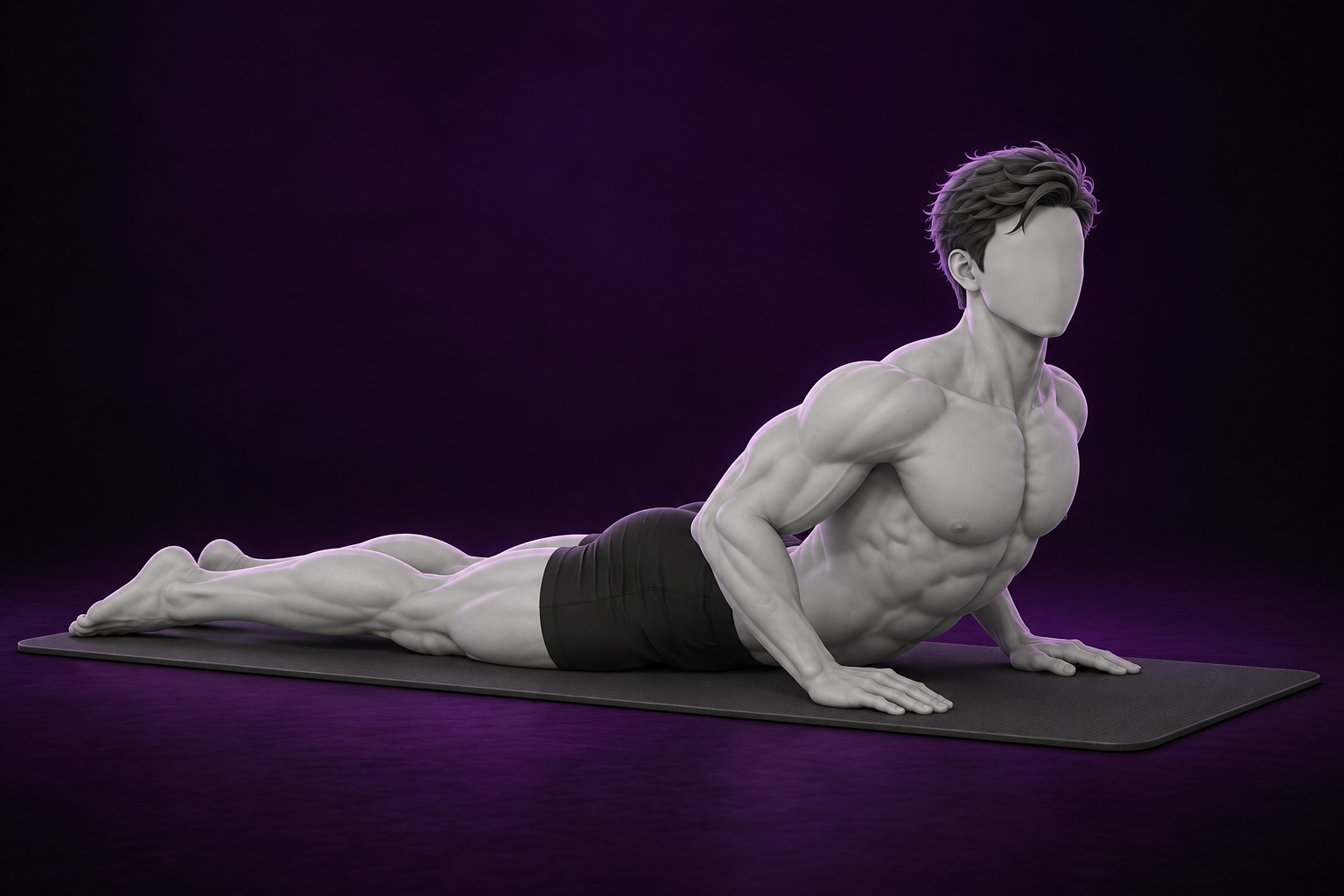
Man performing spinal extension
MOBILITY

Spinal Extension

Extension mobility + posture

Lie face down and place your hands beside your torso. Gently extend the upper body while keeping the movement comfortable. Avoid forcing the lower back into a painful range.

Man performing cat stretch
SPINAL MOBILITY

Cat Stretch

Controlled spinal flexion

Begin on your hands and knees. Slowly round your back upward and allow your head to follow naturally. Move smoothly and avoid forcing the spine.

Man performing child's pose
RELAXATION / MOBILITY

Child's Pose

Back + shoulder mobility

Kneel down, move your hips toward your heels and reach your arms forward. Relax into the position instead of forcing a deeper stretch.

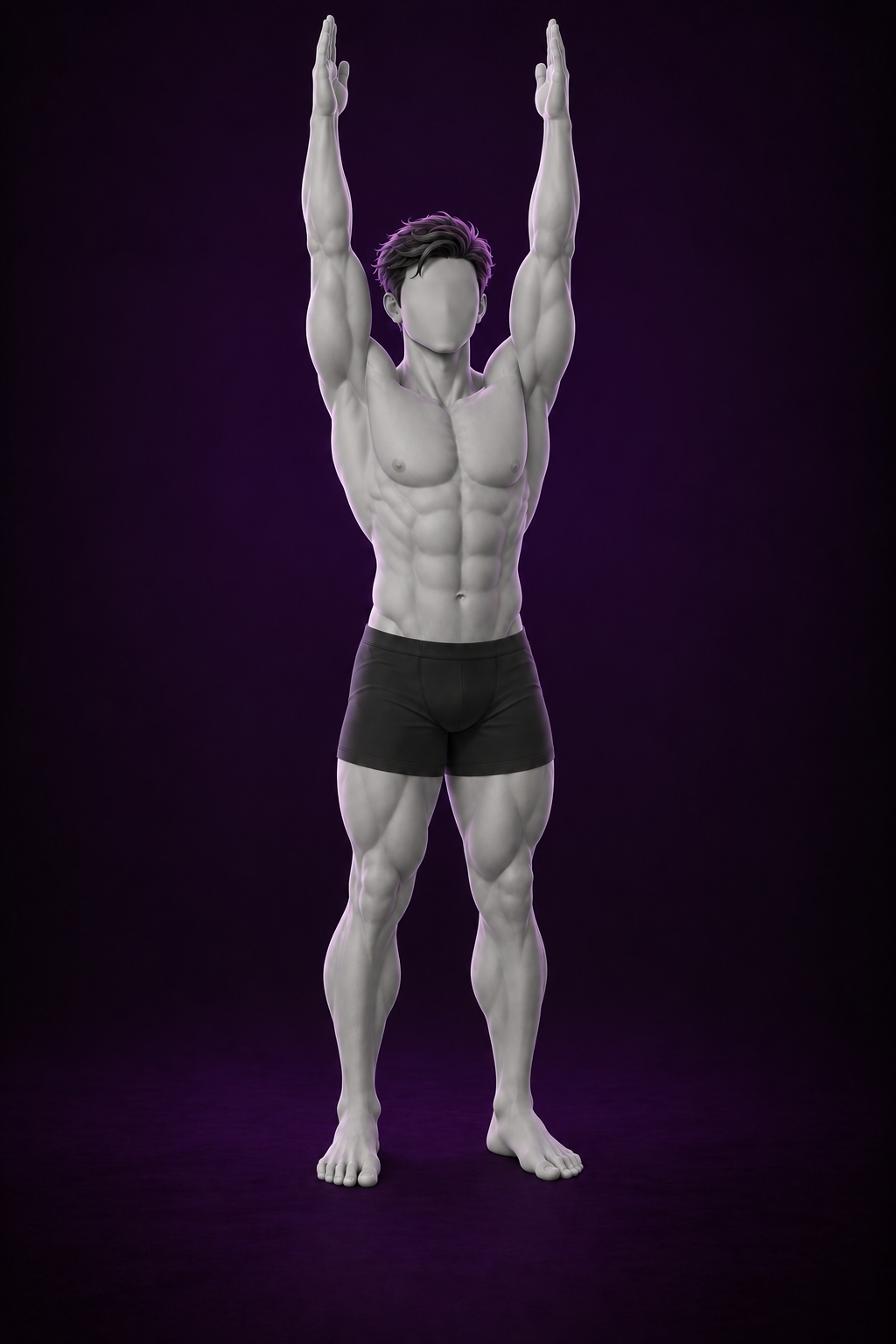
Man performing overhead reach
POSTURE RESET

Overhead Reach

Upright posture + mobility

Stand tall and reach both arms overhead. Keep the ribs and pelvis controlled and think about lengthening upward rather than excessively arching the lower back.

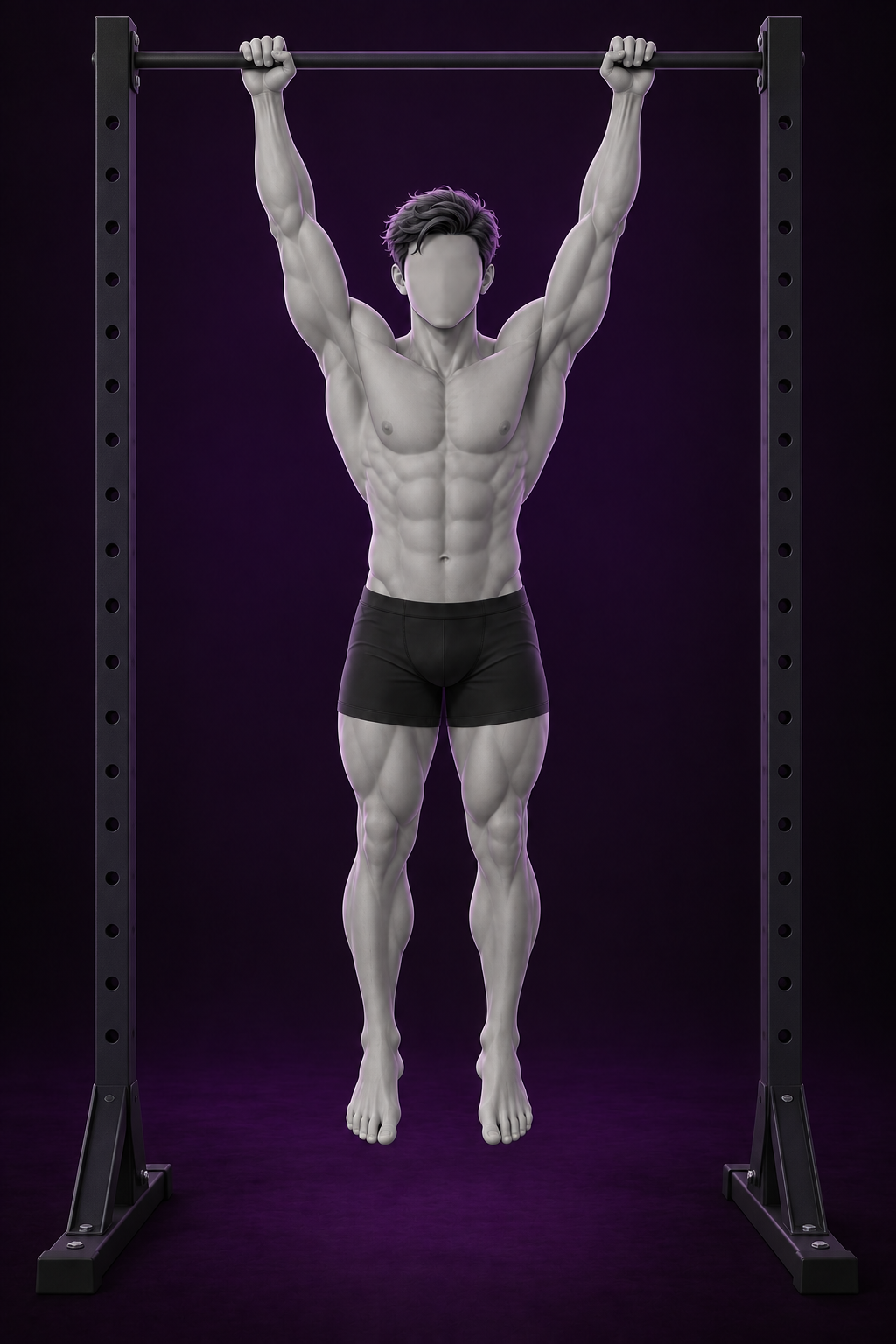
Man performing dead hang
SPINAL UNLOADING

Dead Hang

Temporary unloading + shoulder mobility

Hang from a secure bar with a comfortable grip and allow the body to lengthen naturally. Keep the position comfortable and stop if the shoulders become painful.

Hanging may temporarily reduce spinal loading and can be useful for shoulder mobility, but it does not permanently increase adult bone length.

FM / HEIGHT / 04 REALITY CHECK
H
HEIGHT REALITY

Know What Can Change — And What Cannot.

Once skeletal growth is complete, stretching, hanging and mobility work cannot make the long bones permanently longer.

Their main value is improving mobility, posture and temporary spinal unloading. The realistic objective is not to manufacture additional skeletal height, but to stand, move and carry your existing height as effectively as possible.

Improve the way you carry your frame. Do not confuse temporary spinal changes with permanent skeletal growth.
FM / SHOULDER WIDTH / 01 INFORMATION
UNDERSTAND YOUR FRAME WIDTH

Bone Structure Builds the Base. Muscle Builds on Top of It.

Shoulder width is influenced strongly by genetics and skeletal structure, particularly clavicle length and shoulder-girdle geometry. Muscle development and posture then determine how much of that frame is visible from the outside.

CLAVICLE STRUCTURE GENETIC BASE TRAINABLE WIDTH

Shoulder width is influenced strongly by genetics and skeletal structure. One of the most important parts of that skeletal foundation is the length and orientation of the clavicles, together with the overall geometry of the shoulder girdle.

Bone structure is not the whole story, however. The clavicles and shoulder girdle establish the skeletal base, while the lateral deltoids, rear deltoids, lats, upper-back musculature and posture all contribute to how wide the shoulders appear from the outside.

The timing of skeletal maturation varies considerably between individuals. The clavicle is one of the later regions of the skeleton to reach full maturity, so some natural development may continue into young adulthood.

No exercise or supplement has been shown to selectively lengthen the clavicle. It is therefore important to separate the genetically influenced skeletal base from the aspects of shoulder appearance that remain trainable.

Once skeletal growth is largely complete, the most practical way to increase apparent shoulder width is to develop the musculature surrounding the frame.

Building the lateral and rear deltoids, lats and upper-back muscles can expand the upper-body silhouette. Better upper-back control and posture can also allow the shoulder structure you already have to be displayed more effectively.

These changes do not alter clavicle length, but muscle development and posture can substantially change the visible width and overall appearance of the frame.

FM / SHOULDER WIDTH / 02 CHOOSE YOUR STAGE
WHERE IS YOUR SKELETAL DEVELOPMENT?

Is Your Skeletal Growth Still Active?

i

Not sure which stage applies to you?

Skeletal maturity does not occur at exactly the same age for everyone. Age can provide context, but biological maturity varies between individuals. At younger ages, natural skeletal development may still be continuing. Once skeletal maturity is reached, the practical focus shifts toward shoulder musculature, upper-back development and posture.

FM / SHOULDER WIDTH / 03A DEVELOPMENT PLAN
SUPPORT NORMAL SKELETAL DEVELOPMENT

Support the Development You Already Have

If skeletal development is still ongoing, the objective is to support normal development rather than trying to force a specific bone to become longer or wider.

01 / SLEEP

8–10 Hours

Adequate and consistent sleep supports normal development, hormonal function and recovery.

02 / NUTRITION

Enough Energy

During the growing years, chronic and severe under-eating can work against normal development. Sufficient energy intake supports growth, recovery and daily activity.

03 / PROTEIN

Adequate Intake

Sufficient protein supports muscle development, tissue growth and recovery.

04 / MICRONUTRIENTS

Correct Deficiencies

Correct genuine deficiencies rather than using excessive doses in an attempt to force skeletal growth.

SUPPORT SYSTEM

Bone & Hormonal Support

Calcium

Calcium is required for normal bone mineralization and skeletal health.

Bone-health support — not a clavicle-lengthening supplement.

Vitamin D

Vitamin D supports normal calcium absorption, calcium metabolism and skeletal function.

Correct genuine deficiency when present.

D3 + K2

Vitamin D supports intestinal calcium absorption. Vitamin K is required for the normal function of vitamin-K-dependent proteins involved in bone metabolism, including osteocalcin.

These vitamins participate in complementary aspects of normal calcium and bone physiology. However, K2 should not be treated as a mandatory companion to every dose of vitamin D, and supplement use should reflect actual nutritional needs.

Support bone metabolism — not a bone-width or clavicle-growth hack.

Hormonal Health

Normal skeletal and muscular development depends on healthy endocrine function. Adequate energy, protein, dietary fat, consistent sleep and sufficient micronutrient status all support normal physiology.

Support normal function — not artificial hormone boosting.
FM / SHOULDER WIDTH / 03B VISUAL FRAME PLAN
BUILD VISIBLE FRAME WIDTH

Build the Frame Around the Skeleton

Even when the skeletal base is largely fixed, visible shoulder width can still change substantially through muscle development and posture. The lateral deltoids, rear deltoids, lats and upper back are particularly important.

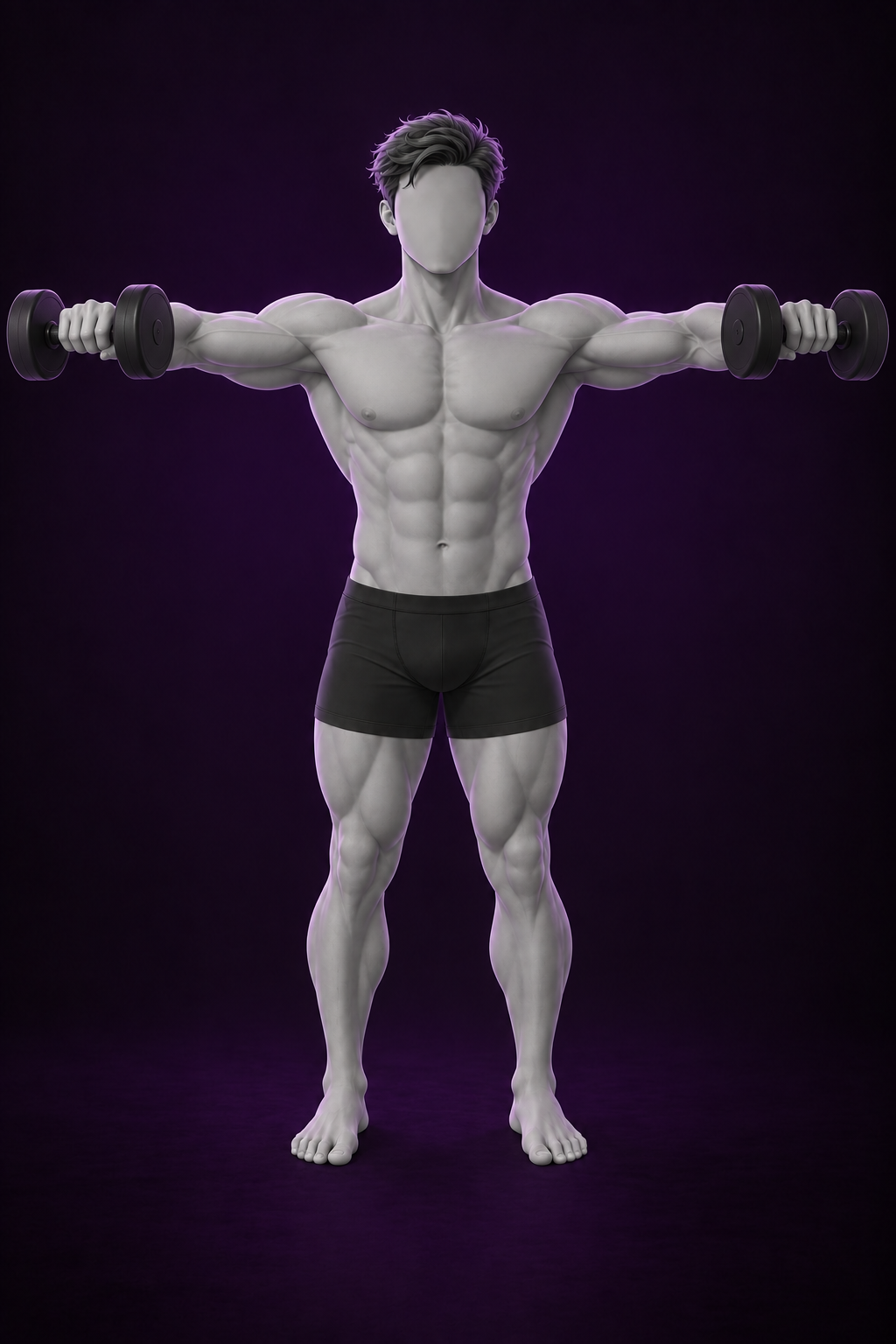
Man performing dumbbell lateral raise
LATERAL DELTOID

Lateral Raise

Visible shoulder width

Hold the dumbbells by your sides with a slight bend in the elbows. Raise the arms outward under control, then lower them smoothly. Avoid excessive shrugging, swinging or momentum.

Developing the lateral deltoids can increase the outward appearance of the shoulders and strengthen the upper-body silhouette.

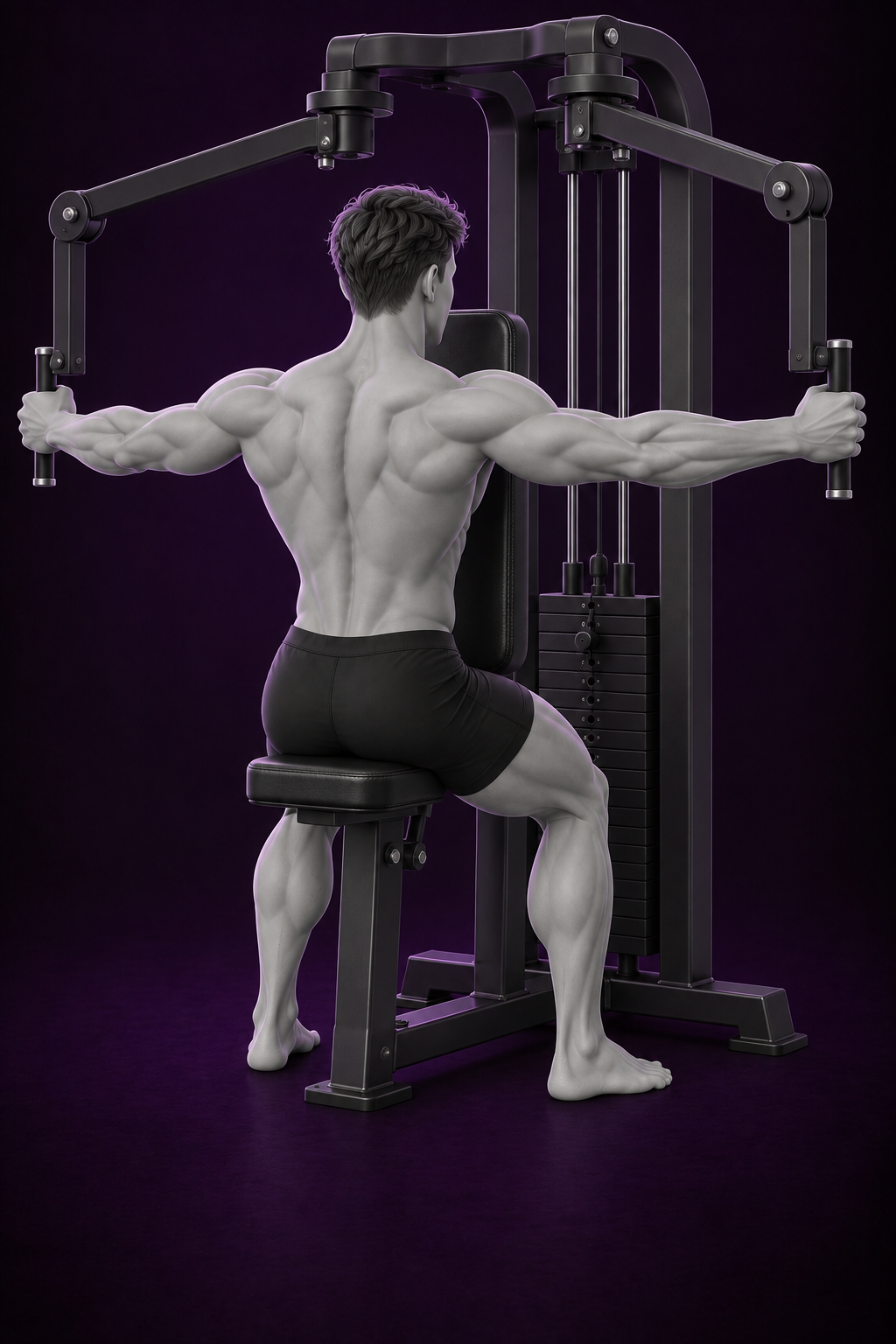
Man performing reverse pec deck
REAR DELTOID

Reverse Pec Deck

Rear shoulder mass + posture

Sit facing the machine with the chest supported. Move the handles outward and backward while keeping the shoulders controlled. Focus on the rear deltoids rather than shrugging the weight.

Rear-delt development can add three-dimensional shoulder mass while complementing upper-back development.

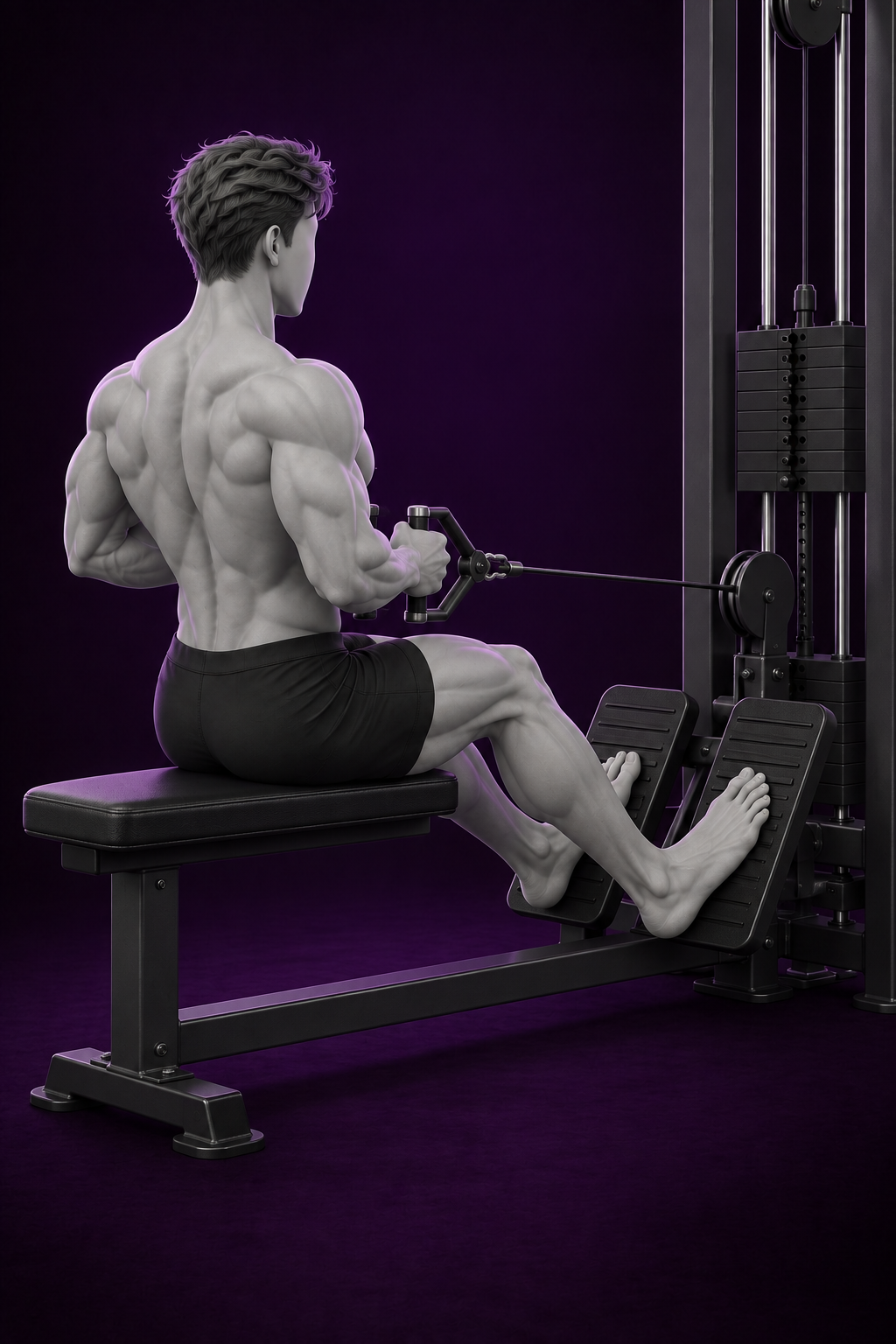
Man performing seated cable row
UPPER BACK / LATS

Seated Cable Row

Upper-back development + posture

Sit tall with the torso controlled. Pull the handle toward the lower ribs while allowing the shoulder blades to move naturally. Return the weight under control and avoid excessive backward leaning.

Upper-back development does not widen the clavicles, but it can add substantial visual mass to the upper torso and improve the way the frame is carried.

FM / SHOULDER WIDTH / 04 REALITY CHECK
F
FRAME REALITY

The Skeleton Sets the Base. Training Changes the Silhouette.

Clavicle length and the underlying skeletal base are largely fixed after skeletal maturity.

Lateral deltoids, rear deltoids, lats, upper-back musculature and posture, however, remain highly trainable. This means that the visible width and overall silhouette of your frame can still improve substantially even when the bones themselves do not change.

Do not chase impossible skeletal changes. Build the strongest visual frame your structure allows.
FrameMog recommendations are provided for general education, lifestyle support and entertainment purposes only. They are not medical advice and do not guarantee increases in height, clavicle length or skeletal width. Growth and skeletal maturity vary between individuals. Supplements should be used according to genuine nutritional needs and, where appropriate, professional medical guidance.